Someone else dropped the ball. I had 14 days to catch it.
The company hired to design Expo CANITEC 2011 in Puebla didn’t deliver. Two weeks before the event, the organizers called me. I said yes, hired four people, and the five of us got the event dressing, the promotional materials and the stand there on time.
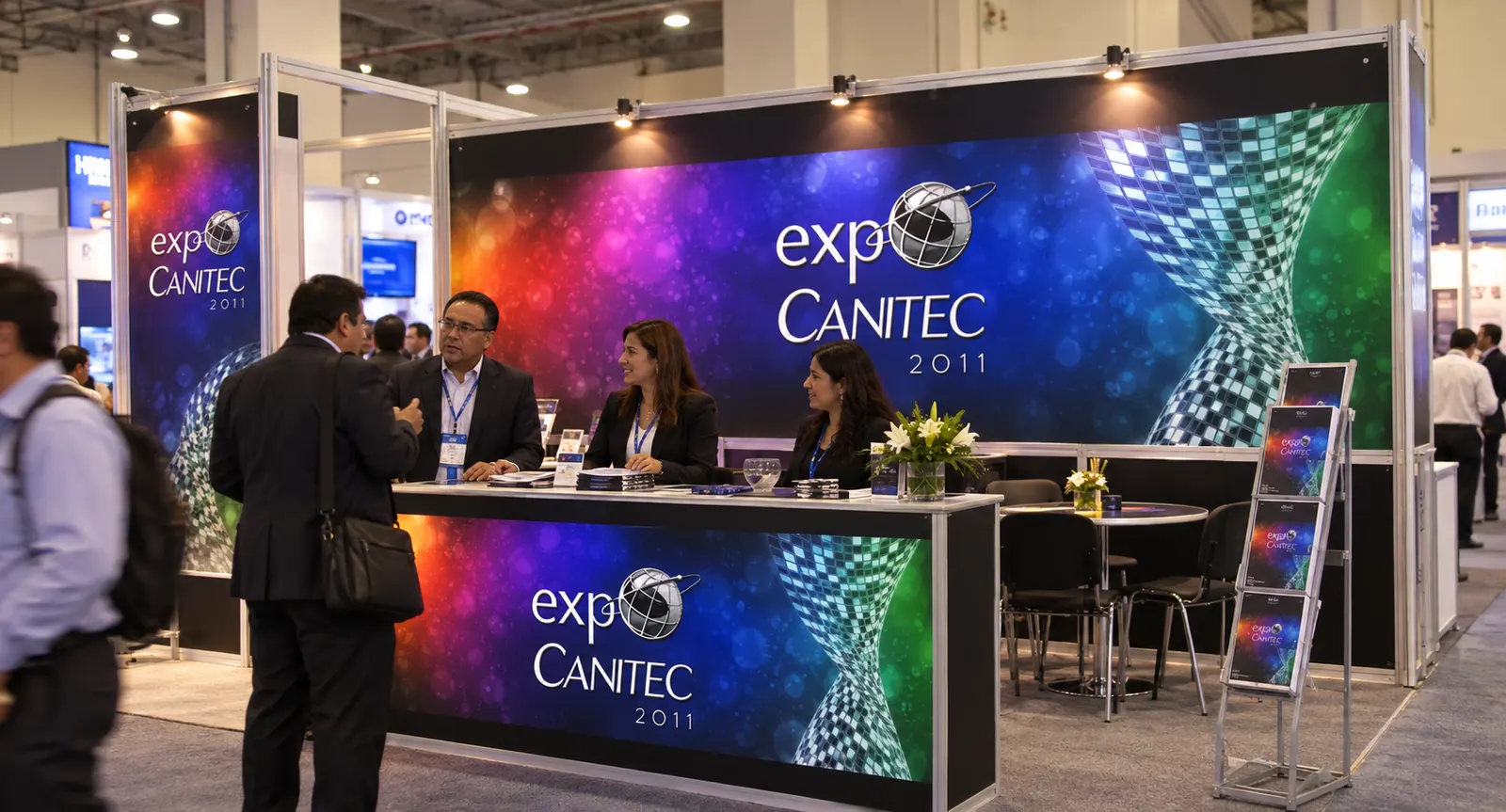 14 days · Puebla · 2011
- Client
- CANITEC, Mexico’s national cable telecom industry chamber
- Event
- Expo CANITEC 2011 · May 25–27
- Where
- Puebla, Mexico
- My role
- Designer and project lead
- Team
- Five: me and four people I hired
- Window
- Two weeks
Design is only step one
With a fixed date, every piece had to be designed, approved, printed, delivered and installed. Two weeks didn’t allow doing it one at a time.
Build the team and the plan
I took over the project, hired four people, split the work, reviewed every visual and coordinated the production suppliers.
All of it, on time
Event dressing, promotional materials and the stand, ready for the expo.
From “they let us down” to opening day
Five people, three workstreams running in parallel.
A date that doesn’t move
Expo CANITEC brings together the cable telecom industry and its suppliers. The 2011 edition ran in Puebla from May 25 to 27. The original design supplier let the organizers down, and by the time they reached me there were about two weeks left.
For an event with a fixed date, an approved layout is only one step. Every piece needs the right dimensions, print-ready files, a supplier who can make the deadline and someone to install it.
What I owned
I took responsibility for the whole design assignment and hired four people to deliver it. My role was designer and project lead at once: turning the brief into deliverables, splitting the workload, reviewing the visuals and coordinating production.
The approach
- Inventory first. What was missing, what it was for, what size, who approved it and when it had to leave for production.
- Slowest things first. A large printed graphic needs approval long before a digital adaptation that can stay editable until the end.
- One visual direction. A base system that adapts quickly, so nobody redesigns each piece from scratch and approvals move faster.
- Release in batches. Approved work went to production while the team finished the rest, instead of piling all the risk at the end.
What changed
The expo opened with its dressing, its promo materials and its stand. That was the success criterion: complete and on time. For me, it was the step from designing pieces to leading a team and a schedule.
Three fronts, one system.
Event dressing
Welcome graphics, banners, signage and space identification.
Promotional materials
Printed pieces with approved content, ready for the printer.
Stand
Graphics fitted to the stand structure, its panel joins and its sightlines.
Something urgent? I do that too.
Dani is waiting in the office with a form and Daniel’s card.